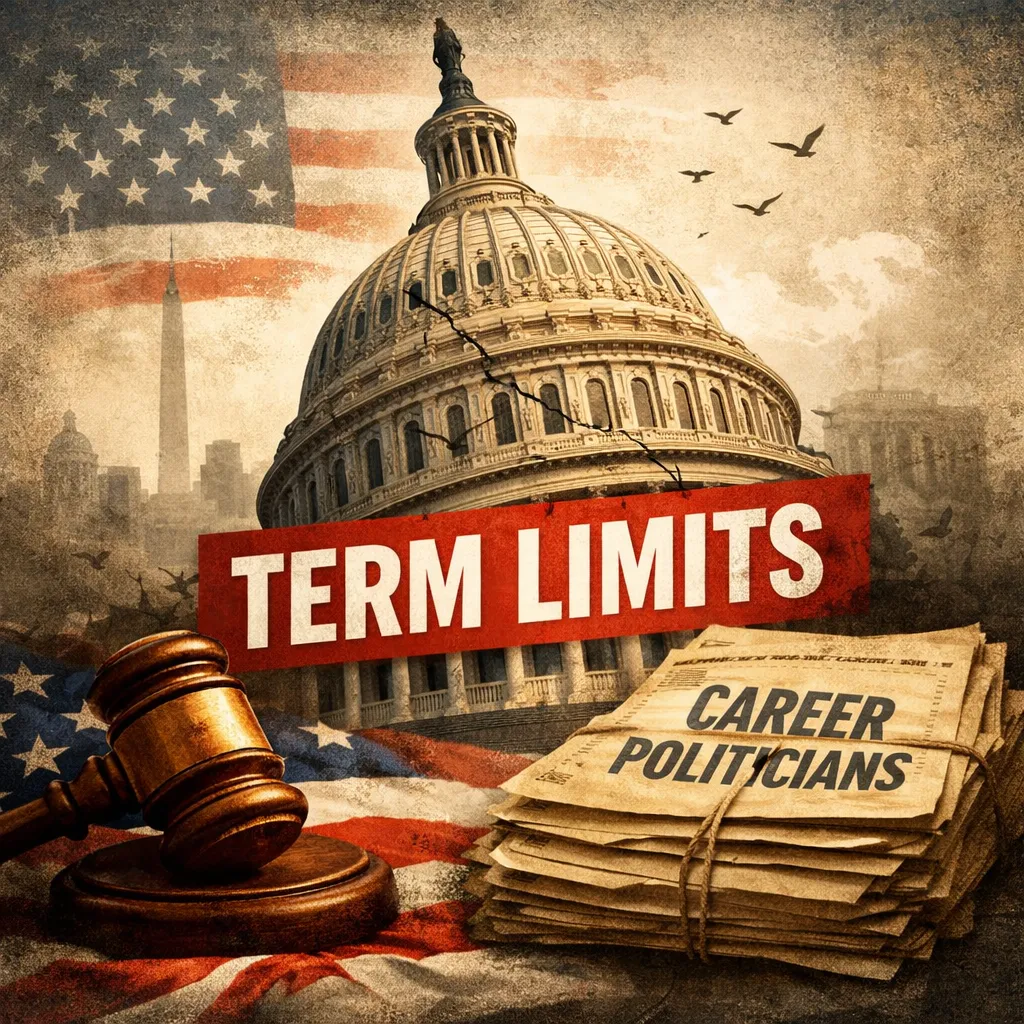
Why Term Limits Are the First Step to Fixing Washington
Why Term Limits Are the First Step to Fixing Washington
Too Long, Didn't Read:
Washington doesn’t change because career politicians stay in office for decades, growing more influenced by special interests and less accountable to voters. Term limits would reset the incentives in Congress, bring fresh leadership, reduce entrenched power, and restore the idea that public office is a temporary public service, not a lifetime career.
For years, we’ve watched Washington become more disconnected from the people it’s supposed to represent.
Members of Congress arrive promising reform. They talk about draining the swamp, restoring accountability, protecting taxpayers. And then something changes. Slowly. Quietly. Over time.
They don’t go to Washington and change it. Washington changes them.
The longer someone stays in Congress, the more the system begins to shape their incentives. Relationships with lobbyists deepen. Fundraising becomes constant. Committee assignments become leverage. Seniority becomes power. And before long, reelection becomes the primary focus.
That’s not because every long-serving member is bad. It’s because human nature hasn’t changed in 250 years.
The Founders understood this. They feared concentrated power. They warned about factions. They built checks and balances for a reason. What they did not expect was a political culture where holding office for 20, 30, even 40 years would become normal.
Public service was never meant to be a lifetime position. It was meant to be a season of life.
Term limits wouldn’t fix every problem overnight, but they would reset the incentives in a way nothing else can.
When lawmakers know they cannot stay indefinitely, they think differently. They focus more on long term good and less on short term politics. They become less dependent on special interests and more accountable to the people back home. Their work becomes about legacy, not longevity.
Fresh leadership brings new energy, new ideas, and a renewed understanding that Congress answers to the people, not the other way around.
This isn’t a partisan idea. It’s an American one. It speaks to the simple belief that power should rotate back to the people regularly, and no office should become someone’s permanent career home.
We cannot expect permanent politicians to voluntarily limit their own power. Real reform rarely comes from inside the building.
It starts when voters demand it.
If we want to fix Washington, we have to change the structure that allows dysfunction to grow. Term limits are the first step because they strike at the root of the problem: too much power held for too long.
Public office should be an honor. It should also be temporary.
That’s how you keep a republic healthy. And that’s where meaningful reform begins.
